“Just rip it off!”

There is nothing more horrifying for a young girl than going shopping with friends, sisters, boyfriends, whoever! And realising that not only are you a size bigger (or smaller!) than you once were. Standing in the changing rooms, breathing in, sucking everything in until passing out is an actual possibility. I have never been one for worrying what size I am, as long as I feel healthy, and to be honest it’s been a long time since I’ve felt normal nevermind healthy! So off we go- clothes shopping.

There were two traumas during this shopping trip; I have misplaced some boobs somewhere, dropping 2 cup sizes. I also got stuck in a dress!

STUCK IN A DRESS.

I have repeated myself because I just want that statement to sink in for a moment… picture it.

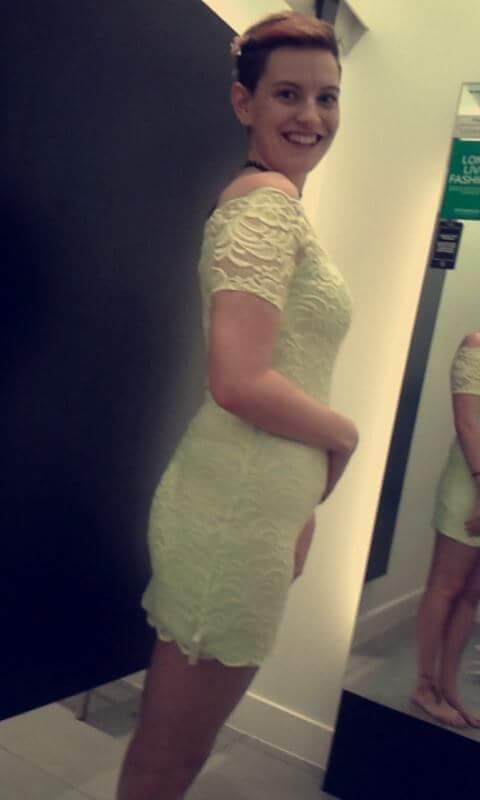
Wandering around the shops, grabbing a dress or two, heading over to the changing rooms, I’m full of smiles. Loving the dress I’d found, I dragged my little sister into the changing room. The size 12 I picked up was so skin tight my sister had to push parts of me in just to pull it down!

Not worrying too much I attempted to get it off. “Eh?! So what if I have to get the next size up? I love this dress” 

I couldn’t get it off. I was literally stuck in this dress. I’m giggling and laughing, saying pull and push, this way and that way and it still wouldn’t budge. My sister is yelling at me without shouting (it’s kind of a yelling voice but in hush tones for those that have never done this!) telling me to try and bend over so she can pull it over my head, I’m thinking if I bend, the seam of this dress is going to go and my ass is gonna be out of the thing! I then got really hot all of a sudden as a feeling of extreme claustrophobia overcomes me, panicking “just rip it off, get it off me!”

Finally, using the “PIVOT!” method, I was out of the friggin’ thing.

I was hysterical. Hysterically laughing. We were laughing so much.

Standing in my underwear I then wait for my sister to bring me the next size up. A quick knock and she comes strolling in, with this leading statement: “The 12 was way too small, so I got a 16.” My jaw hit the floor, tongue rolled out, eyes wide. 16?! The size 16 wasn’t much better, giggling to each other and giving up, my sister and I decided to look at shoes. I’m always the same size in shoes!

To jump from a size 12 to a size 16 in 10 minutes is every woman’s nightmare. Or so I thought?

Recently, I have found it hard to laugh. I have found it hard to be positive- especially about my body. Not so much body image but resentful that my body hates itself and gives me chronic pain. And so, this ‘stuck in a dress-gate’ was just what I needed! I needed to laugh. Not only were me and my sister laughing, but apparently the rest of the ladies in the other changing cubicles had a good chuckle about it as well.

The design of the dress, the fabric it’s made out of obviously doesn’t suit curvy women; and I’m sticking to that statement.

So traumatic it could have been, but at least I made myself and other ladies smile for 5 minutes.
I hope this made you smile, just a little.

image

Little 16

A xo

My first time- Acupuncture

When I was told that I’d have this illness for the rest of my life, I had the naive ideation that I would just take some pills, some Feminax and everything would go on as normal. Oh, how wrong I was. Chronic pain has seeped into all the cracks of my life, bringing with it- its entourage; fatigue, depression and an unhealthy reliance on pain killers. I am not addicted to pain killers, not yet, but I do rely on them most days. I have had to search all over the web, looking for natural methods to ease the pain, alternative medicines that don’t make me look like a zombie, so I don’t lose days at a time during my ‘pain storms’. For this I have put together a survival kit: heat pads, hot water bottle, Tens Machine and a long soak in a hot bath.

Within a month of my diagnosis, I had visited my GP several times and was given different prescriptions over and over. I changed my diet, reduced my caffeine, dairy intake and cut out red meat entirely, hoping that all the online forums were right. In April, I decided enough was enough and it was probably time to think outside of the box. Acupuncture?

Acupuncture is:

  • “a system of complementary medicine in which fine needles are inserted in the skin at specific points along what are considered to be lines of energy (meridians), used in the treatment of various physical and mental conditions.”

I had my doubts. But, in desperation, I picked up the phone and stated my interest in having a session ASAP- to help with the pain. Within a few hours, I was contacted by the acupuncturist. A lovely man that seemed to understand my illness and empathise completely- which helped in itself as I was used to receiving a lot of blank faces when I disclosed my endometriosis. He seemed eager to help and sounded so sure that he could help; brimming with complete confidence in his craft. I was given an appointment the very next day.

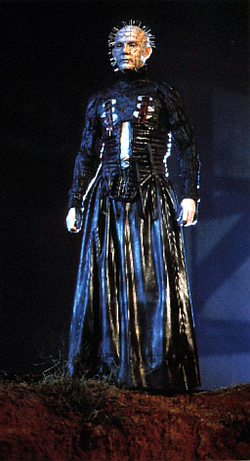
I travelled the few miles to the therapy centre, my anxieties growing, starting to feel uneasy. The idea of having needles all over my body was not comforting. My worries grew and soon I had the image of Pinhead from Clive Barker’s ‘Hellraiser’ answering the door, beckoning me into the treatment room, to my torture. I have included a picture, just to show you how quickly my imagination escalated! Oh dear.

Pinhead

Pinhead

The therapy centre is off the beaten track in a village just outside of my town, I had never really seen the area very well or visited it much. It was a lovely, uncharacteristic spring day as we drove down a lane adjacent to fields with spring lambs bouncing through the grass. My spirits lifted even more when I saw the building. New and shiny, it stands in what appears to be the grounds of an old school. With the sun bouncing from the round window and a light breeze through the trees, I walked the paved path and spied an overgrown tennis court with weeds covering the court lines and growing through the net. It truly is a lovely place and if you have the chance to look around, please do. You can find the website here.

Anyway, enough of the location and my wild imagination. Next- bring on the actual experience! A short young man welcomed me into building. It is light and airy, full of windows and has a minimalist style. I started to feel better already. I turned to my husband to seek reassurance; we had suggested him waiting around or accompanying me but decided against it in the end what with the session possibly taking over an hour. I was a big girl and didn’t need him to hold my hand- much.

Once in the session, I told my story of confusion, worry and pain. I told the acupuncturist of all my hospital visits, my surgery, my medications. He asked about my diet and lifestyle. I explained that since all of this started I’d not really had much of a lifestyle. When he urged me to discuss my diet, I faltered. I was embarrassed. At that point, I pretty much survived on a diet of what I ‘fancied’. My appetite was poor, but I had to eat as I was taking medication so it was mainly things that I liked; junk food. As I reeled off my list of food stuffs, I became increasingly aware of how it sounded like a child’s menu without adult supervision; chicken nuggets, noodles, chips, chicken/tuna pasta, pie, smiley faces and broccoli. I’m pretty sure if Turkey Twizzlers were still in production, they’d have been on the list as well! He laughed and wasn’t too hard on me about it.

It came time for pins. Pinhead’s ugly, cruel features flashed in my mind instantly and then was forgotten as my acupuncturist talked me through the procedure. He is extremely well trained and qualified. He had learned in China, had a university degree, but most of all, it was his absolute assurance that it would be beneficial to me. And after months of medical professionals “trying this” and “giving this a go” – it was about time! He told me that he could feel how different parts of my body were poorly based on the different areas he could take my pulse. For example, on that day, through close monitoring of my pulse, he could tell that my lower abdomen and intestine were extremely enflamed. Woah. Even CT and Ultrasounds scans, X-rays and blood tests couldn’t tell that in my 5 hospital admissions.

Bring on the pins. The first few were a little cause for concern; going in my feet and toes! Ugh. This was hell for me, the idea of having a needle in my bony feet, is harrowing. I felt them go in, but as I wasn’t looking, it didn’t hurt, and they were quickly forgotten. I had a total of 7-9 needles in my legs, feet and wrists. He continued to check my pulse through the procedure and after the pins were in for 20 minutes confirmed that my pulse showed that the aggravated body parts and eased and settled down a little. He stated that I may need ‘top-up’ sessions (it looked like I would be seeing more of Pinhead) and that he would contact me to see how I was feeling.

On leaving the session and building, the sun was shining. I don’t know whether it was a psychological thing as I expected to feel better, whether the pins had actually eased my raw organs or whether my painkillers had kicked in, but I felt like running. I felt more upbeat, laughing as I retold my experience to my husband, including all the Pinhead bits! My body felt alive, tingly almost, I felt ready to run a marathon; that sensation when all your muscles tighten in expectation of adrenaline. Everything felt slower, I felt ready, better able to cope with the day. It was £40 well spent.

I was under the impression this would last a week. It didn’t. Within a few hours I started to feel very tired, my muscles ached and it was hard to keep my eyes open. I collapsed into bed for an early night. The next few days I had pain but it was more manageable. I was able live close to normal, doing things I would normally do; work, eat, walk. And just for that, I would recommend, wholeheartedly, the Acupuncture experience.

A xo

I said I don’t write poetry…I lied

My mind ripples.

Like a mirror pool.

It’s the best way to explain it.

One small thing makes a lasting impact on my thoughts that expand and encompass everything until it is the only thing remaining.

Twisting it, corrupting it. Until I hardly recognise it as my thought at all.

Only it’s not just one ripple.

There are hundreds, starting at the same time or different times, by different things that will inevitably connect in time.

When they do, my mirror will shatter.

Shards of glass will lay discarded, unwanted in a pile. Like the thought never mattered at all.

And where’s the sense in that?

But my mind continues to ripple.

A xo

The trick of it…

“…she told herself, is to be courageous and bold and make a difference. Not change the world exactly, just the bit around you. Go out there with your double-first, your passion and your new Smith Corona electric typewriter and work hard at … Something. Write beautifully. Cherish your friends, stay true to your principles, live passionately and fully and well. Experience new things. Love and be loved if at all possible. Eat sensibly. Stuff like that.” — David Nicholls (One Day) 

Well, I don’t have a double-first or an electric typewriter and I certainly don’t eat sensibly. But I do live passionately, through all the good and bad days. I love to learn, to look at something with a new perspective, to meet new people. 
Though it’s hard, I try to follow my principles but honestly, they shift and change. With each person I meet or each day I read something interesting, I shift my perspective of what’s going on in my life. When I ask a friend their opinion, it always makes a difference to how I feel or what I think. I always take it on board. I think each negative experience is just as valuable as a positive one. How else would we learn from our mistakes? 
It’s very easy to slide into a comfortable rhythm, a monotonous routine. And then you wake up One Day thinking “what have I done with my life, really?” Do not be that guy. 
You might not be able to find the cure for cancer, or flood a drought, or stop world hunger or create world peace. But you can smile and be there for someone else. Be that guy. 
A xo 
Ps. Definitely recommend the book.. 
One Day – David Nicholls 

Tattoo: Artistic or Taboo?

Everytime I get a new tattoo, my mum always says something like:

“You’re not going to want tattoos when you’re 90 and an old lady. What are you gonna do then?”

My response:

“Nothing. I’m gonna be a kick-ass Granma.”

Although I can understand her point of view, it’s hard for me to feel as though I should defend myself. I had my tattoos done for me, for reasons personal to me. I don’t criticise when someone I know gets a new hair cut or a piercing or goes on a diet. It’s none of my business. It’s the same for tattoos.

At one time, tattoos were regarded as gang signs, trade signs, and for gentry (male) only. Something, that marks your body forever, something permanent, exclusive, illlustrious. When did that change? At some point, we stopped viewing tattoos as something taboo and starting thinking of them as art, our bodies as canvases.

In the 19th Century, Harmsworth Magazine estimated that 1 in 5 gentlemen in Britain had tattoos. Men gathered in drawing rooms in huge estate homes, to boast their ink. So even then it was well regarded in high society. There were consistent rumours that Queen Victoria had a small tattoo in an intimate place (bet she did, saucy minx!) as well as he consort Prince Albert (and we all know what he’s famous for!)

I think ink gives a person the opportunity to express themselves, showing who they really are.  It wouldn’t do for everyone to look the same.

A xo


You should know….
 a tattoo should be thought out carefully and planned. You  should know the artist and be comfortable in working with her/him.

“From our own correspondent: The Kony 2012 campaign and the effect of Social Media”

In this feature, I will be talking about the affect of social media on the Kony 2012 campaign, exploring the benefits and disadvantages of using this medium.
Kony 2012 went viral on March 7th 2012. I know exactly when I heard about it, exactly what I was doing and it stuck with me forever. Surely this describes how compelling the documentary is?
Kony 2012 is a half-hour documentary that is supported by Invisible Children, a charity that was co-founded by Jason Russell, in 2005, to fight African war atrocities. The video is based on Joseph Kony, with the specific aim to make him famous, not in celebration but to make the world aware of his crimes and to fight for his arrest…
Kony, the leader of the Lord’s Resistance Army has been said to have abducted around 60,000 children; forced the boys to kill their parents and turned the girls into sex slaves. Kony is at the top of the International Criminal Court’s ‘Most Wanted List’.
Over the years many of those individuals on the ICC’s list of wanted people have been “brought to justice” as it were…
We saw the death of Osama Bin Laden last year, one of the world’s most notorious terrorists, killed at a hideout in Pakistan. Then it was onto Libya and the uprising of people there, eventually resulting in the regime of Colonel Gadaffi being toppled and the former Libyan leader killed, after months of conflict across the country…So why has Joseph Kony not met the same fate? It’s simple…because there is no political or financial reason in doing so. Kony represents no political party or financial interests; he is simply responsible for a number of humanitarian atrocities…
The Lord’s Resistance Army, Kony’s enterprise, was formed in Uganda 25 years ago and is now based in Congo. The boy soldiers are encouraged to murder their parents and families, mutilating them in ways too horrific to describe. Survivors will be as badly scarred on the outside as the inside…
On April 20th 2012, when the sun goes down the world will cover the night. Posters, t-shirts, banners will be displayed throughout the western cultures in a massive attempt to make Kony famous. In the 5 days running up to April 20th, people are urged to sign the Pledge and to create more media coverage. Sample tweets have been emailed world-wide to encourage people to appeal to world leaders to arrest Kony and put an end to his tyranny…
The film has been an almost instant viral success, dominating Twitter worldwide and having one of the fastest ever take-offs on You Tube. The hash tag #stopkony has had hundreds of thousands of tweets, and millions of people now know something about Uganda and what is happening to children there…
It’s safe to say that this campaign has benefited on a huge scale from social networking sites, like Twitter. The Invisible Children organisation has been able to reach millions of people, in different countries, cultures and societies with just a push of a button. And what’s wrong with rallying together for a good cause? The Kony 2012 project was a hugely successful exploitation of social media and a testament to the power of an integrated social media network…
Social media was the mechanism that enabled Barack Obama to be elected. During the Virginia Tech massacres of April 2007, students were texting and ‘facebooking’ such messages as ‘Facebook saved my life’, giving it an agency of its own. Facebook founder Mark Zuckerberg should be sanctified. Jamal Albarghouti, who was a graduate student at Virginia Tech, recorded an onsite video during the shootings’ For all of that, he has become, on a Facebook description, a ‘citizen journalist’.

Social Media like Twitter, Facebook, YouTube and Tumblr have allowed wider access for charitable organisations such as Invisible Children and campaigns like Kony 2012. They can reach a worldwide audience and spread their beliefs quickly…It is useful for raising awareness and increasing public engagement.
However, the problem with social media is that it spreads like wild-fire. This only becomes an issue if the story is untrue. Rumours have been circulating that have led to criticisms for Kony 2012.
Michael Wilkerson discussed the criticisms, he said:
 It would be great to get rid of Kony.  He and his forces have left abductions and mass murder in their wake for over 20 years.
But let’s get two things straight:
Joseph Kony is not in Uganda and hasn’t been for six years;
The LRA now numbers at most in the hundreds, and while it is still causing immense suffering, it is unclear how millions of well-meaning but misinformed people are going to help deal with the more complicated reality.”…
And so, if Kony 2012 has over exaggerated the severity of Kony’s crimes, a lot of the people who have watched the video have been misled. This is a huge disadvantage when using social media. You cannot be sure whether the document you are reading, video you are watching or campaign you are joining is trustworthy…
The documentary has been criticised for not sticking to the BBC’s impartiality rule of journalism. No, it isn’t impartial. But impartiality is not going to motivate anyone into action.
Journalists have described it as partisan, tactless and very bold. Well, that it may be. But it has fulfilled its objectives in that its exponential popularity growth on the web has grabbed attention and now the world is aware of Joseph Kony…
Personally, from looking at Kony 2012 I’m suddenly aware of the power that social networking represents in our modern day society. It has taken such an incredibly influential role to the point that logging onto Facebook has become as normal and regular as eating and sleeping. What do I do when I wake up first thing in the morning? I check my phone, check Twitter, check Facebook… etc. All of that before anything else, it has become the “modern day” start of the day…
Social media has helped raise awareness for this campaign, but will it actually stop Kony? Probably not, but the hope is that that it motivates change. Not just in this situation but in all others… The LRA has damaged families, hurt quality of life and is affecting traditions. Exaggerated or not, it needs to end.
Yes, Joseph Kony is just one person and there are other criminals out there, but if social networking, can make such an impact and raise so much awareness then think what else can be achieved. What else is out there? So rather than thinking of Kony 2012 as a campaign based solely on the capture of one man, rather see it as an example of the change that can be achieved in a modern day world…with a little help from the internet.
A xo
Chicken or the Egg………………………in psychology?

So basically, I got into quite a heated debate earlier this evening at the SU bar. 2 guys were discussing whether anxiety or anxious dispositions are innate (biological) i suggested that there must be social factors involved to trigger such emotional stimuli. And we’re off….

Freud was mentioned (god help us!) and the ID, EGO & SUPEREGO… then there was sexual orientation and whether or not it occurs naturally and whether we have that sexual identity from birth. Is it developed?

It was then argued that paedophiles are not born with an attraction to children but they ‘find’ that particular behaviour. He went on to say that people are born gay or straight, bu then surely paedophiles would be born with the innate attraction to minors as it is sexual attraction (even if it is a deviant one) ?

Do we develop into the people we are today? Or are we born with the cognitive ability, social preferences and behaviours? Nature  vs Nurture, that’s the debate. 

It’s complicated and my colleague issued a “chicken or the egg?” statement which was highly frustrating and i resent it!

SO what do you think? lemme know..

A xo

How has social media influenced the Kony 2012 campaign?

Kony 2012 went viral on March 7th2012.
Kony 2012 is a half-hour documentary that is supported by Invisible Children, a charity that was co-founded by Jason Russell, in 2005, to fight African war atrocities. The video is based on Joseph Kony, with the specific aim to make him famous, not in celebration but to make the world aware of his crimes and to fight for his arrest.
Kony, the leader of the Lord’s Resistance Army has abducted children and forced the boys to kill their parents and turned the girls into sex slaves, is at the top of the International Criminal Court’s ‘Most Wanted List’.
The Lord’s Resistance Army, Kony’s enterprise, has been moving through the countries of Africa and is now based in Uganda. The boy soldiers are encouraged to murder their parents and families, mutilating them in ways too horrific to describe. Survivors will be as badly scarred on the outside as the inside.
On April 20th 2012, when the sun goes down the world will Cover The Night. Posters, t-shirts, banners will be displayed throughout the western cultures in a massive attempt to make Kony famous. In the 5 days running up to April 20th, People are urged to sign the Pledge and to create more media coverage. Sample tweets have been emailed world-wide to encourage people to appeal to world leaders to arrest Kony and put an end to his tyranny.
These appeals are made through Twitter and Facebook and other social media. This campaign has benefited on a huge scale from social networking sites, like Twitter. The Invisible Children organisation has been able to reach millions of people, in different countries, cultures and societies with just a push of a button.

Social Media like Twitter, Facebook, YouTube and Tumblr have allowed wider access for charitable organisations such as Invisible Children and campaigns like Kony 2012. They can reach a worldwide audience and spread their beliefs quickly.
Answer to my question? YES. 

Guest Speaker Report: David Hayward, Peter Kingston, Jeremy Seabrook

David Hayward
When I think of the BBC, I think of the professional corporation that captures the attention of the nation for hours at a time. As a representative for the BBC, David Hayward did not fail to impress. Mr Hayward began his presentation by discussing his love of debates and what he believes the future will hold for journalism in the BBC. He definitely captured the attention of the room like someone who is used to speaking in front of people, he looked comfortable and assured of his abilities. His PowerPoint presentation was professional and full of facts, charts and interesting information, but this would have been nothing without his funny, laidback approach to presenting it.
David talked about the BBC College of Journalism with particular enthusiasm and described the exciting new operation at Salford and the big opportunities it presented for the up and coming journalist. He beguiled his audience on the glamorous side of broadcasting and what is yet to come with regards to the BBC. David’s presentation was very much about entertaining us and motivating us to be the best journalist we could be.
David engaged us with his account of the changing face of journalism and how the heart of journalism has got to be breaking those key stories and holding power to account. Informing us of all the mediums we need to be aware of to help us, as journalists, to tell a story. He stressed importance of social media; how blogging, Twitter, Facebook can all influence the news, allowing viewers to engage and how it makes the life of a journalist easier and connecting to world news more efficient.  
David was able to show the difference between generations and the correlation of news consumption with the help of a line graph. These visual aids helped his presentation along and ensured the understanding of the information he was presenting.
Mr Hayward was able to, indirectly, illuminate aspiring journalists of how important contacts are. His presentation mentioned accounts of high ranking journalists and their experiences. Each account held a different angle that would inspire different types of students.


Peter Kingston
Even though Mr Kingston stopped being a journalist in 2009, he still holds a lot of insight into the ferocious industry that is journalism. He has worked for local and regional newspapers and has written for well-known papers like The Daily Mirror, The Times and The Telegraph. Like little children at story time, we waited eagerly for his account.
A softly spoken man, he spoke of his retirement and how he wanted to do something else in his career and apologised that his presentation wasn’t as polished as he’d like.
Peter then went on to describe his experiences at the beginning of his career in journalism. In 1979 it was such a struggle to get even a foot in the door in the world of media. Becoming a journalist was no easy feat. He spoke about one of his most unpleasant weeks of his life, an amusing tale of his time in Guildford. Peter was given the task of writing about the Guildford Four trial, a very prolific story at that time.
Sitting at the front of the room, he fervently described the classic scene of a 1980’s newsroom, smiling at this. Cigarette smoke, shouting, typewriter tapping, a hive of activity. Peter told us of frustrated mornings spent standing in a phone box, trying relentlessly, to relay a story back to the copytaker. The phone boxes often smelled funny and were surrounded by other competing journalists. He confessed to us the unglamorous, grotty locations, the endless piles of carbon copy paper and of having the exquisite skill to dictate a story straight from the notebook.
Although not as prepared as he should’ve been, Peter still presented an inspiring, eye-opening account of journalism. Peter’s talk gave us an exciting insight into the life of a journalist and gave us a glimpse of what we could expect. And I can guarantee we weren’t expecting some of the things he told us about!
Jeremy Seabrook
Jeremy Seabrook, originally from Northampton, has written more books than you can shake a stick at. He is an articulate, well dressed, older man who shared his memories and experiences of being a writer and being part of the Northampton community. Jeremy was able to give the audience a totally different aspect of their degree. It made us realise there’s a lot more than just reporting and radio, being able to write well is vital also.
He reminisced about the old Northampton, back when it was still known as a shoe and boot town where the people were stingy, grudging and suspicious, but also honest and dependable. He spoke of how Northampton has always been an inspiration for his writing.
Mr Seabrook mentioned that he had written his first few books based on his own life and relationship with his mother. While talking, he was looking away from the audience, smiling, almost as though he was thinking of a secret but not wanting to share it with the audience. This definitely gave Jeremy’s talk a mystical element that helped him capture his audience.
He spoke of a more ethical way of writing. Jeremy is persistent and has continued to commit to the downtrodden and poorer side of society, through to the wider society in the UK and the rest of the world. Stuttering he confesses he tries to always write from the heart.
Jeremy’s highlight in his career was meeting with Prince Charles and Kensington Palace to talk about his article on unemployment in Scunthorpe. His imitation of Prince Charles was charming! He spoke of how rewarding his writing is, both on a personal level and in a professional aspect.
Jeremy Seabrook stood nonchalantly, his hand in his pockets, fully relaxed as he read a snippet from his book. Akin to that of a storyteller, he enchanted the audience with his rendition.
 
A xo